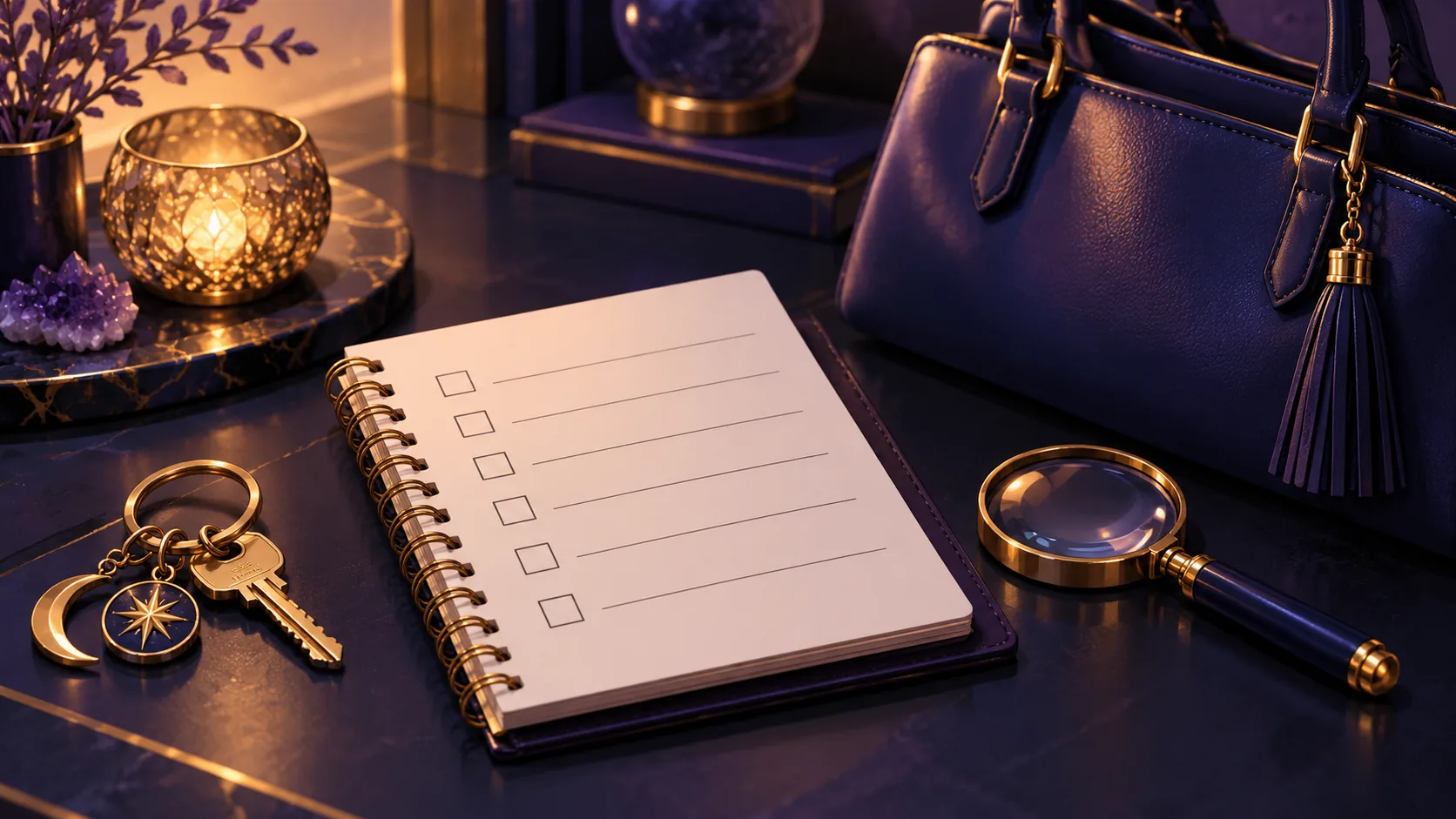
Build a search timeline first
Write down the last moment you definitely had the item, where you went next, and who may have moved shared belongings. Check containers, clothing, transit, and the places where you changed tasks. A brief timeline is more useful than searching the same drawer repeatedly.
For bank cards, identity documents, or devices, take protective steps such as locking accounts or reporting loss through the relevant service. Do that even if you also choose a reading.
What to tell a reader
Describe the object plainly: size, color, material, unusual marks, and the last confirmed location. Explain which places you have already ruled out. Ask for a specific, testable clue such as an area or nearby object rather than a guarantee that the item will be recovered.
Turn a clue into a practical check
If a suggestion points to a room or bag, check it once carefully and record the result. If a clue does not fit, discard it. Avoid paying for repeated sessions solely because a reader promises the next one will reveal the exact location.
- Search the last confirmed location and nearby surfaces.
- Check pockets, bags, laundry, car seats, and recent deliveries.
- Ask people who may have tidied or borrowed the item.
- Record what was checked to avoid repeating the same loop.
Keep expectations clear
No psychic method can verify a missing object's position. Treat a reading as optional reflection alongside an ordinary search. If the loss involves theft or safety, follow the appropriate official process.